
Stress fractures are a common occurrence in sports and the military, particularly among athletes that perform low-intensity, high-volume activities such as long-distance running. Typically, conservative management is utilized, coupled with a graduated return to activity program once adequate bone healing has occurred. However, stress fracture reoccurrence rates can be very high, up to 36% in some populations. 1 (opens in a new tab) While many physical therapy interventions, such as muscle strengthening, can be utilized to minimize this recurrence rate, I want to examine the effects of nutrition and supplementation on stress fracture healing.
Before examining the role of nutrition/supplementation, it is important to understand the mechanisms behind stress fractures. Stress fractures are typically grouped into two types: fatigue and insufficiency fractures. Fatigue fractures are typically the result of a repetitive load upon a bone that occurs with an abnormally high frequency (imagine the weekend warrior who decides to start running 30 miles/week to train for a marathon) and these will be the type of stress fracture that this post addresses; insufficiency fractures are the result of normal loading upon abnormally weakened bone, and can occur in individuals with rheumatoid arthritis, metabolic bone disease, neurological disorders, etc. Fatigue fractures occur when increased activity of osteoclasts (cells that resorb bone cells) outpaces the activity of osteoblasts (cells that lay down new bone cells). This leads to a weakening of the bone, which eventually leads to an accumulation of microfractures, which are termed a stress fracture. 2 (opens in a new tab) Once the repetitive load is decreased or removed from the bone, osteoclast activity decreases, allowing the bone to rebuild itself. In order to facilitate the recovery process and/or prevent the recurrence of stress fractures, therapies should aim to decrease the activity of osteoclasts and/or increase the activity of osteoblasts.
One place to start when considering supplements is with vitamin D. Vitamin D is known to contribute to bone health, and it is known that when individuals are deficient in vitamin D, they release more parathyroid hormone, which triggers an increase in osteoclast activity. 3 (opens in a new tab) A study published in 2016 found that Royal Marine recruits with insufficient vitamin D levels at baseline (<50 nmol/L) experienced a significantly greater risk of developing stress fractures over the course of the study. 4 (opens in a new tab) This study found that the majority of stress fractures occurred towards the end of the 32-week program. Interestingly, the majority (88%) of the stress fractures occurred in recruits that finished the program in Winter or Fall – the times of the year when serum vitamin D levels are the lowest. These results open the door for future research to investigate the protective effect of vitamin D supplementation during the winter months against stress fracture incidence. In a similar study from 2018, the researchers found that British Army recruits with insufficient vitamin D levels (<50 nmol/L) experienced longer recovery times compared to recruits with sufficient levels. 5 (opens in a new tab) Both of these studies suggest that vitamin D supplementation is important for maintenance of bone health and prevention of stress fractures.
However, vitamin D supplementation should not be as simple as popping a capsule every morning. First, vitamin D is a fat-soluble vitamin, meaning that fat is needed to help vitamin D cross the intestinal lining and enter circulation in the blood. A study from 2015 found that eating a meal composed of 30% fat improved vitamin D absorption by 32%. 6 (opens in a new tab) Another important, yet often overlooked nutrient involved in bone healing is vitamin K. Also a fat-soluble vitamin, vitamin K activates osteocalcin, a protein responsible for the accumulation of calcium in the bones. 7 (opens in a new tab) Some studies have even found that high levels of undercarboxylated osteocalcin (osteocalcin with low biological availability that occurs when vitamin K levels are low) are associated with low bone mineral density. 8 (opens in a new tab) This research leads me to believe that if you are supplementing with vitamin D, it would be beneficial to take it with a fat source that contains vitamin K as well.
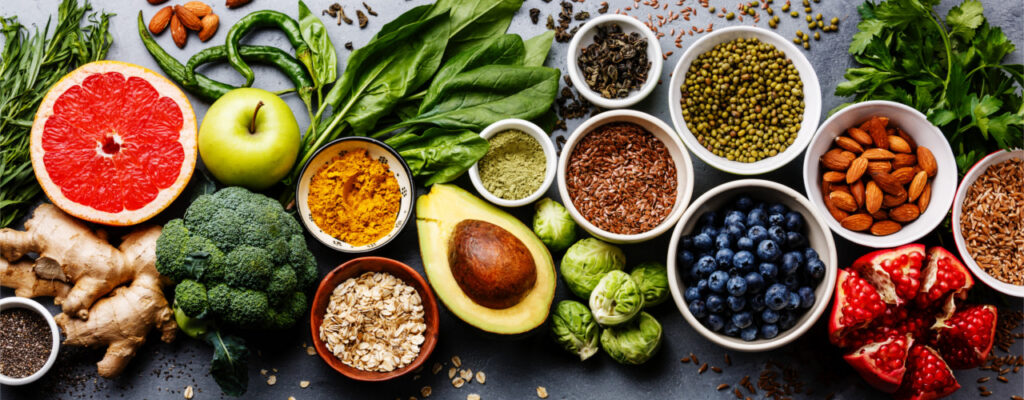
As alluded to above, one of the primary mechanisms by which vitamin D improves bone health is via increasing calcium absorption from the small intestine. 9 (opens in a new tab) The NIH posted a good article (opens in a new tab) on maximizing calcium absorption in 2018. To highlight a few items, they give a list of foods that are high in calcium; these are primarily dairy foods, fish, and some vegetables, such as kale and broccoli (although these foods contain oxalic acid, which binds to calcium and makes it less absorbable; the oxalic acid content can be decreased by cooking the foods prior to consumption). Research is also finding that dietary patterns play a significant role in bone health. In a brand new study from January 2019, the authors found that diets rich in calcium, potassium, and protein were associated with greater bone mineral content in the tibia (the most common site of stress fractures), as well as strength of the tibia. 10 (opens in a new tab) While this does not necessarily equate to a reduced stress fracture risk, these appear to be desirable qualities in populations that are at risk of developing a stress fracture.
In conclusion, recent research is finding that low vitamin D levels are correlated with stress fracture incidence and prolonged recovery time. Vitamin D absorption via supplementation is improved when taken with a fat source and concurrently with vitamin K (personally, I take my vitamin D supplement in the morning with a cup of Bulletproof coffee (opens in a new tab), which is an excellent source of fat and vitamin K; while there’s no research looking at the efficacy of this technique, it seems it would work based on my understanding of the science). Since the primary mechanism of action by which vitamin D improves bone health is via increasing calcium absorption, it is important to have appropriate calcium intake, the best of which can be found in foods such as dairy, seafood, and green leafy vegetables.
There are many other nutrients that may assist in enhancing bone health, such as zinc, copper, silicon, vitamin B6, magnesium, and many others. However, I believe the vitamins and minerals discussed above provide a good starting point for beginning to improve a patient’s bone health and hopefully stave off the initial occurrence or recurrence of stress fractures. For more info on these other nutrients, check out the links here (opens in a new tab), here (opens in a new tab) and here (opens in a new tab). As always, thanks for reading and I hope you learned something new. If you would like to see more posts on the effect nutrition has on various injuries, let me know in the comments!
References
- Rauh MJ, Macera CA, Trone DW, et al. Epidemiology of stress fracture and lower-extremity overuse injury in female recruits. _Med Sci Sports Exerc_. 2006;38(9):1571-1577. (opens in a new tab)
- Matcuk GR, Mahanty SR< Skalski MR, Patel DB, White EA, Gottsegen CJ. Stress fractures: pathophysiology, clinical presentation, imaging features, and treatment options. _Emerg Radiol_. 2016;23:365-375. (opens in a new tab)
- Goolsby MA, Boniquit N. Bone health in athletes: the role of exercise nutrition, and hormones. _Sports Health_. 2017;9(2):108-117. (opens in a new tab)
- Davey T, Lanham-New SA, Shaw AM. Low serum 25-hydroxyvitamin D is associated with increased risk of stress fracture during Royal Marine recruit training. _Osteoporosis Int_. 2016;27(1):171-179. (opens in a new tab)
- Richards T, Wright C. British Army recruits with low serum vitamin D take longer to recover from stress fractures. _J R Army Med Corps_. 2018;doi: 10.1136/jramc-2018-000983. (opens in a new tab)
- Dawson-Hughes B, Harris SS, Lichtenstein AH, Dolnikowski G, Palermo NJ, Rasmussen H. Dietary fat increases vitamin D-3 absorption. _J Acad Nutr Diet_. 2015;115(2):225-230. (opens in a new tab)
- Hauschka PV. Osteocalcin: the vitamin K-dependent Ca2+-binding protein of bone matrix. _Haemostasis_. 1986;16(3-4):258-272. (opens in a new tab)
- Bugel S. Vitamin K and bone health. _Proc Nutr Soc_. 2003;62(4):839-843. (opens in a new tab)
- Laird E; Ward M; McSorley E; Strain JJ; Wallace J. Vitamin D and bone health; potential mechanisms. _Nutrients_. 2010;2(7):693-724. (opens in a new tab)
- Nakayama AT, Lutz LJ, Hruby A, Karl JP, McClung JP, Gaffney-Stomberg E. A dietary pattern rich in calcium, potassium, and protein is associated with tibia bone mineral content and strength in young adults entering initial military training. _Am J Clin Nutr_. 2019;109(1):186-196 (opens in a new tab)