Dry Needling
Dry needling is a physical therapy technique in which a thin, sterile needle is placed in tight muscle knots called trigger points to reduce muscle tension, ease pain and improve movement. Western Slope Rehab and Performance offers dry needling near you in Grand Junction, Fruita, Palisade, Orchard Mesa, Appleton, Clifton and the Redlands.
How trigger point dry needling works
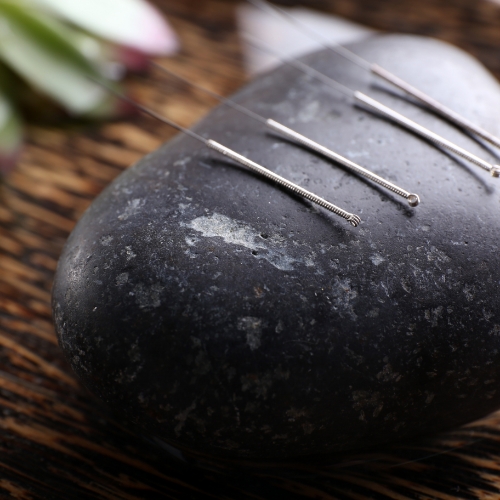
A trigger point is an irritated spot in a muscle that stays tight and can be sore, or send pain to other areas. Trigger point dry needling places a thin needle, with no medication in it, into that spot and sometimes into nearby tendon or ligament tissue.
Our clinicians explain the effect this way: the needle causes a small local reaction in the tissue, and the body responds by sending more blood flow and healing signals to the area. The nerves around the muscle also settle down, so the muscle can stop guarding. The research on dry needling is still developing, so we describe it as a tool that may reduce tension and pain, used alongside exercise.
Dry needling or acupuncture?
People often use the terms as if they were the same. They are not.
Same tool, different approach
Both use a similar thin needle. Acupuncture comes from an Eastern medicine perspective. We are not acupuncturists and do not practice it.
Western anatomy
Dry needling is based on Western medicine and research. The goal is to change pain, movement and function by treating the nerves, muscles and tissues that let you move.
Aimed at muscle
We target trigger points and related tissue. We do not make claims about organs or energy.
Does dry needling hurt?
What will I feel during the needling?
Most of our patients report little to no discomfort. You may feel a quick muscle twitch or a deep ache as the muscle releases, and that is expected. Your therapist works to keep the treatment as comfortable as possible.
Will I be sore afterward?
Some patients feel muscle soreness for up to 48 hours, which usually settles by itself. Heat or cold packs and plenty of fluids can help.
What is electrical dry needling?
Sometimes a mild electrical current is passed between a pair of needles. Our clinicians have written that this can block pain signals on their way to the brain, make the muscle contract so blood flow and oxygen increase, and help move swelling out of the area. It is not used for everyone. Your therapist will tell you whether it makes sense for you.
Is dry needling covered by insurance?
Coverage depends on your plan. Call us at (970) 314-9822 and we will check, or see our Insurance page.
Where we use dry needling
One treatment covers every body area. The condition pages explain how it fits each problem.
Shoulder and arm
- Shoulder pain
- Elbow, wrist and hand pain
- Golfer's elbow and tennis elbow
Hip, leg and whole body
Tell us first if any of these apply
Dry needling is not right for everyone. Say so at your evaluation if you:
- have a bleeding disorder
- take blood thinners (ask us before treatment)
- are pregnant
- have a strong fear of needles
You will also sign a consent form for dry needling. Your therapist reviews it with you, and can offer other hands-on options such as Manual Therapy if needling is not a fit.
Needling plus exercise
In our experience, the best results come when dry needling is combined with exercise-based care. John Kuhn, Physical Therapist examines you first and tells you whether needling is the right course. People sometimes call the technique intramuscular stimulation, but it is the same idea: release the muscle, then train it to hold the change.
You can start without a doctor's referral in most cases; see Direct Access.
Related care
Try dry needling in Grand Junction
We see patients from Grand Junction, Fruita, Palisade, Orchard Mesa, Appleton, Clifton and the Redlands. You can start physical therapy without a referral from a doctor in most cases. Some insurance plans, including Medicare, still need a doctor's sign-off on the plan of care. If you are unsure, call (970) 314-9822 and we will check your plan. See Direct Access.
We see patients from Grand Junction and the surrounding Grand Valley: Fruita, Palisade, Orchard Mesa, Appleton, Clifton and the Redlands.