Instrument-Assisted Soft Tissue Mobilization (IASTM)
Instrument-assisted soft tissue mobilization (IASTM), often called scraping therapy, uses a plastic or metal tool to glide over the skin and loosen scar tissue and tight tendons and muscles. Western Slope Rehab and Performance offers IASTM in Grand Junction, Fruita, Palisade, Orchard Mesa, Appleton, Clifton and the Redlands.
Why patients call it muscle scraping
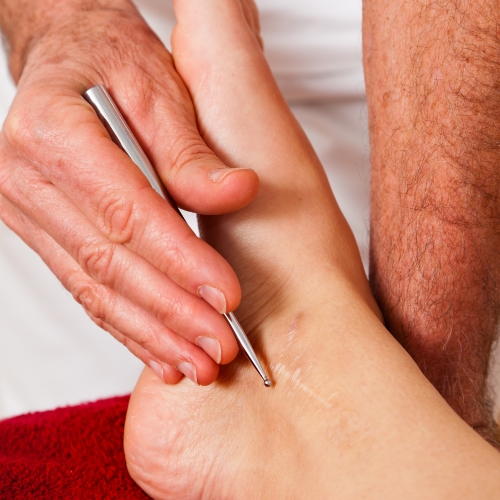
In IASTM your therapist uses a specially shaped tool, plastic or metal, and strokes it over the skin with controlled pressure. Patients see it and call it muscle scraping or soft tissue scraping, but the pressure is adjusted to the tissue and to you.
The tool picks up restrictions in connective tissue that fingers can miss. Different speeds and pressures are used depending on what is wrong. The pressure causes a minor inflammatory response in the treated muscle, tendon or ligament, and that nudges the body's own healing process. In practice patients often notice less pain with movement and better motion afterward.
Problems IASTM is used for
Scar tissue treatment and tendinitis treatment are the most common reasons we reach for the tools.
- Plantar fasciitis and heel pain
- Achilles tendonitis
- Rotator cuff tendonitis
- Patellar tendonitis and IT band syndrome
- Tennis and golfer's elbow
- Post-surgical and traumatic scars
- Muscle strains, tight muscles and ligament sprains
- Shin splints and bursitis
- Carpal tunnel syndrome and trigger finger
What the treatment feels like
During
Firm pressure and a scraping sensation over the area. It should be tolerable. Say so if it is too much.
Right after
The skin may look red for a short time, and mild bruising is possible. This usually fades without any care.
Next day
The area can feel a little sore, like after a workout. Your therapist will give you movements to do.
IASTM is a warm-up for exercise, not the whole plan
Loosening a tendon or scar makes it easier to move, and we use that to start strengthening and motor control work. That is why IASTM sits beside Manual Therapy and exercise in your plan. Only a physical therapist can tell you whether it suits your problem, so it begins with an exam.
It is a close relative of Cupping Therapy, which uses suction instead of strokes, and of hands-on soft tissue work from our licensed massage therapists; see Massage Therapy.
Let us know before IASTM if you
- take blood thinners
- have fragile skin
- have an open wound or an infection in the area to be treated
In these cases we choose another way to treat the area.
Where IASTM fits
These pages describe the conditions in full.
Foot and ankle
Heel pain and Achilles tendon problems. See Foot & Ankle Pain.
Knee and shoulder
Tendon irritation and tight tissue. See Knee Pain and Shoulder Pain.
After surgery and sports injury
Scar tissue and restricted movement. See Post-Surgical Rehab and Sports Injury Rehab.
Related care
Loosen stubborn tissue in Grand Junction
Patients come to WSRP from Grand Junction, Fruita, Palisade, Orchard Mesa, Appleton, Clifton and the Redlands. You can start physical therapy without a referral from a doctor in most cases. Some insurance plans, including Medicare, still need a doctor's sign-off on the plan of care. If you are unsure, call (970) 314-9822 and we will check your plan. See Direct Access.
We see patients from Grand Junction and the surrounding Grand Valley: Fruita, Palisade, Orchard Mesa, Appleton, Clifton and the Redlands.